


Your dashboard looks perfect. ROAS is at 4.5x. Meta says it’s driving 40% of your revenue. Google Ads shows a stellar conversion rate. Everything appears to be working.
But here’s the uncomfortable question every established business owner needs to ask: If you turned off all your ads tomorrow, would you actually lose sales?
For many seven- and eight-figure businesses, the honest answer is shocking: probably not as many as you think.
Imagine you’re running a race. You’ve been training for months, building your stamina, perfecting your stride. As you approach the finish line, exhausted but triumphant, a stranger jumps in front of you, crosses the line first, and claims they won the race.
This is exactly what’s happening with most of your advertising spend.
Your ads aren’t creating demand, they’re simply intercepting customers who were already on their way to buy from you. They’re showing up at the finish line and claiming the win.
The technical term for this is attribution without causality. Your marketing platforms are excellent at taking credit for conversions, but they’re terrible at distinguishing between sales they caused and sales that would have happened anyway.
The Meta at the Checkout Story
Picture this scenario: You own a retail store. A customer walks in, browses your products, compares prices on their phone, reads reviews, and finally decides to buy. They walk to the checkout counter with their wallet already out.
Just before they pay, one of your employees runs up, hands them a promotional code, and then immediately reports to you: “Great news! I just generated a sale!”
Did that employee actually drive the sale? Or did they just insert themselves into a purchase that was already happening?
This is precisely how most retargeting campaigns work. And it’s costing you thousand, or tens of thousands, every month.
The Two Biggest Budget Traps
Trap #1: The Branded Search Trap
You’re paying Google $5, $10, sometimes $20 per click for people who are literally searching for your brand name. These are customers who already know you exist, who are specifically looking for you, and who would click on your organic listing (which is free) if your paid ad wasn’t there.
The illusion: Google reports these as “conversions” and gives your campaign a beautiful conversion rate.
The reality: You’re paying for traffic you would have gotten for free. It’s like paying someone to hand you mail that was already being delivered to your house.
Trap #2: The Retargeting Trap
Someone visits your site, adds items to their cart, and then leaves to check their bank account or compare one last competitor. They were always planning to come back, 72% of cart abandoners return within 24 hours anyway.
But before they return organically, your retargeting ad appears on Instagram. They click, complete the purchase, and Meta triumphantly claims credit for the conversion.
The illusion: Meta reports a 10x ROAS on retargeting campaigns.
The reality: You paid to “convert” someone who was already converting.
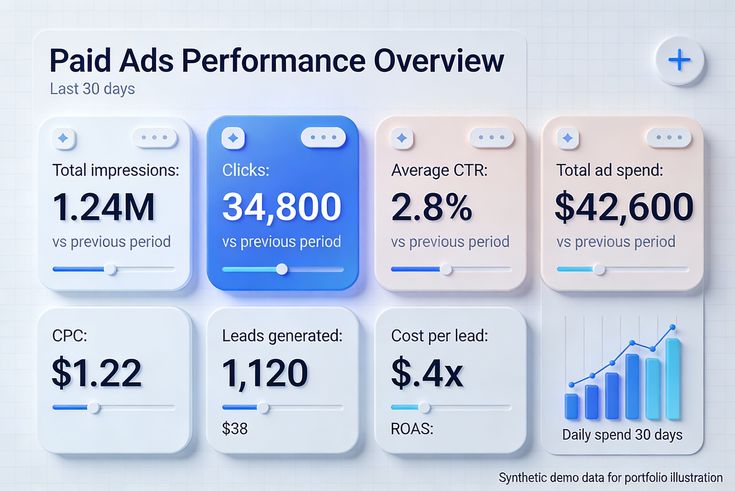
Image Credit: SetProduct via Pinterest.
Attribution vs. Causality: The Critical Distinction
Here’s what most business owners don’t understand about marketing attribution:
Attribution = “This ad was present when the sale happened”
Causality = “This ad caused the sale to happen”
Every major advertising platform (Meta, Google, TikTok) uses attribution models that conflate these two concepts. They operate on a fundamental principle: if someone saw or clicked on your ad at any point before purchasing, the ad gets credit. This is like giving your umbrella credit for stopping the rain because you were holding it when the storm passed.
The platforms aren’t lying, they’re just measuring the wrong thing. And this measurement error is costing established businesses an enormous amount of money.
The Question That Reveals Everything
If you’ve been in business for 3+ years, have strong organic traffic, and carry recognizable products or have built a brand, you need to ask yourself:
“How much of my advertising spend is going toward people who were already going to buy?”
For most established businesses, the answer is somewhere between 40% and 70%.
That means for every $100,000 you spend on ads, $40,000 to $70,000 is going toward sales that would have happened anyway. You’re not buying growth, you’re buying an expensive receipt for organic demand.
The Incrementality Question
True marketing effectiveness isn’t measured by attribution. It’s measured by incrementality:
“Did this ad create a sale that wouldn’t have happened otherwise?”
This is the only question that matters for sustainable growth. Everything else is vanity metrics designed to make platforms look good and keep you spending.
Think about it this way:
- If your ROAS is 4.5x but 60% of those conversions would have happened anyway, your true ROAS is actually 1.8x
- If you’re spending $50,000/month with a “4x ROAS” that’s really 1.8x, you’re actually losing $14,000 every month
- Multiply that over a year, and you’re burning $168,000 on illusory performance
How to Conduct Your Own Incrementality Audit
You don’t need a data science team or expensive software to start understanding what’s really working. Here are three practical tests you can run this month:
Test #1: The Branded Search Pause
What to do: Pause all branded search campaigns for 2-3 weeks in a specific geographic region (or your entire account if you’re feeling bold).
What to measure: Compare total branded traffic and conversions during the pause vs. the weeks before. If your organic branded traffic increases proportionally to replace the paid traffic, you’ve just identified wasted spend.
Expected result: For most established brands, 70-90% of branded search spend is recaptured organically.
Test #2: The Geo Holdout Test
What to do: Select 2-3 similar geographic markets (similar size, demographics, historical performance). Turn off all paid advertising in one market while keeping it running in the others.
What to measure: Compare sales performance between the “dark” market and the active markets over 4-6 weeks.
Expected result: If sales in the dark market drop by less than your advertising spend would predict, you’ve found non-incremental spend. If sales drop by 20% but ads represented “50%” of attributed revenue, you’ve just proven 30% of your spend was wasted.
Test #3: The Retargeting Frequency Test
What to do: Segment your retargeting audiences by time since last visit (0-1 day, 1-3 days, 3-7 days, 7-14 days, 14-30 days). Run campaigns only to the later segments (7+ days).
What to measure: How much of your retargeting “revenue” disappears when you stop advertising to people who were likely to return anyway.
Expected result: Most businesses find that 40-60% of retargeting conversions come from people who visited within 24 hours—precisely the group most likely to convert organically.
What Good Incrementality Looks Like
Here’s what actually drives incremental sales:
- Prospecting campaigns that reach genuinely new audiences who don’t know your brand
- Competitor targeting that intercepts customers actively comparing alternatives
- Strategic promotions that create urgency for fence-sitters (not people already buying)
- Product education content that solves a real barrier to purchase
- Upper-funnel awareness that builds future demand rather than harvesting existing demand
These channels are harder to measure with last-click attribution, which is exactly why most businesses under-invest in them. They look “worse” on dashboards while actually performing better for the business.
The Uncomfortable Truth
If you’re running an established business with strong organic demand, your advertising platforms are probably showing you what you want to see rather than what you need to know.
They’re designed to maximize their revenue, not your profit. And the easiest way to do that is to take credit for sales you were already generating organically.
The good news? Once you identify non-incremental spend, you have two powerful options:
- Reallocate budget to genuinely incremental channels
- Pull budget out entirely and improve your profit margins by 20-40%
Both options are better than what most businesses are doing now: pouring money into campaigns that are effectively paying for the privilege of handing customers a receipt.
The First Step
Start by asking the uncomfortable questions:
- What percentage of my “conversions” are people who already know my brand?
- How many of my retargeting conversions would have happened anyway?
- If I turned off ads for a month, how much would my revenue actually drop?
Then run one of the three tests above. You don’t need perfect data, you just need directionally correct insights. Because the alternative is continuing to celebrate a 4.5x ROAS while slowly going out of business.
If you want to learn how to cut through the noise and build a simple, founder-friendly system for knowing what’s actually working, without hiring a data team or becoming a spreadsheet expert, check out this article:
→ “Why 80% of Companies Feel Overwhelmed by Data and How Founder-Led Brands Stay Ahead”
You’ll discover:
- Why more data almost always leads to worse decisions
- The 3-metric framework that replaces 47 different dashboards
- How to build a “decision-ready” reporting system in under 2 hours
The incrementality audit is just the beginning. Once you understand what’s truly incremental, you need to rebuild your marketing strategy around the channels and tactics that actually grow your business, not just the ones that claim credit for it.
But first, run the audit. The truth is worth finding.
Request a Signal Check
This is a short second-opinion assessment. No prep required. No sales pitch.
Prefer email? Reach me at hello@acloserperspective.com